
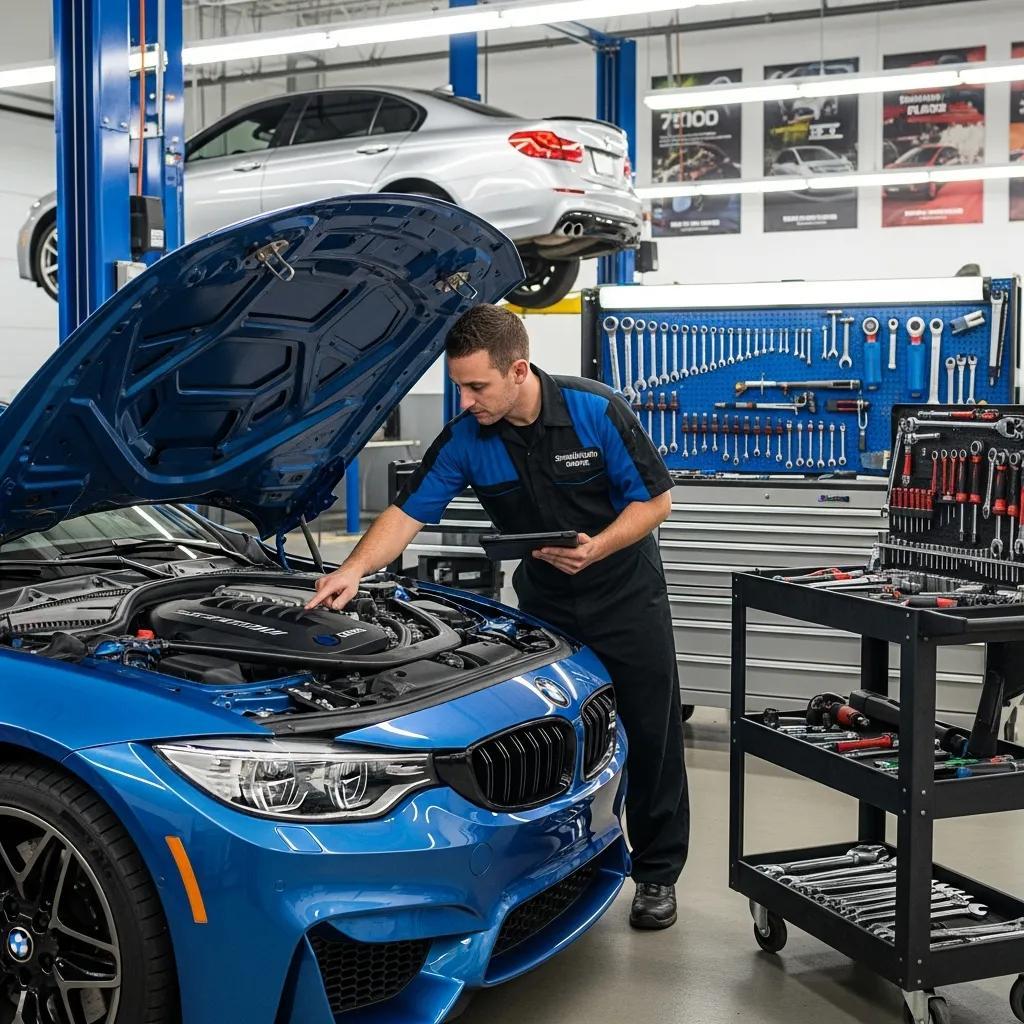
Owning a BMW or Mini is rewarding — but small service oversights can turn into large repair bills quickly. This local guide is written for North Andover drivers who want straightforward, practical steps to keep their cars dependable and avoid unexpected costs. We outline seven common mistakes BMW and Mini owners make, explain how each one accelerates wear or failure, and give clear actions you can take today. You’ll get targeted advice on oil and fluid care, cooling‑system risks, gasket leaks, diagnostics and check‑engine response, brakes and suspension, battery replacement and registration, plus tire care and alignment — all tuned for Massachusetts driving (short trips, winter salt, and mixed highway use). Use the checklists and inspection tips to prioritize service and stop small problems from compounding.
Many owners assume modern engines tolerate long intervals or that generic parts will do, but seven predictable mistakes cause most avoidable repair bills. From skipped oil changes to ignored alignment symptoms, each oversight creates a mechanical consequence when left alone. Recognizing these mistakes helps you prioritize inspections, follow proper service intervals, and choose the right parts so ownership costs stay manageable. Below is a concise list of the seven mistakes, the immediate effect on the car, and a short preventive action to avoid escalation.
The seven most common maintenance mistakes and immediate consequences:
Every one of these issues is preventable with routine inspections and timely service. The sections that follow explain the mechanics, common symptoms, and the clear steps you can take to avoid costly outcomes.
Letting oil intervals slip lets contaminants and combustion byproducts thicken the oil, reducing lubrication and increasing friction on bearings, camshafts and the valvetrain. Over time, sludge can block oil passages and clog VANOS units or oil‑filter housings, reducing performance and risking long‑term damage. Regular oil service preserves the oil film, protects the engine’s precision tolerances, and extends the life of parts like the oil‑filter housing and valve‑cover gasket. If you do a lot of short trips or cold starts around North Andover, scheduled oil changes matter even more — condensation and fuel dilution accelerate oil breakdown and shorten effective service life.
Table: Recommended oil types and change intervals for typical BMW applications; use this to plan service and confirm the correct oil spec.
Sticking to manufacturer‑recommended fluids and intervals protects engine components and reduces the chance of expensive downstream failures.
How Schneller helps: Routine oil service and correct fluid selection prevent most early internal wear. At Schneller BMW and Mini Specialists we perform scheduled oil changes with BMW‑spec fluids and provide personalized guidance to keep your engine running right.
Modern BMW engines and drivetrains rely on fluids with specific friction characteristics, additive packages and thermal stability. Generic products can degrade seals, shorten pump life, and alter transmission shift quality. The wrong coolant or brake fluid can promote corrosion or reduce braking performance. Using BMW‑approved oil, transmission fluid, coolant and brake fluid protects components like water pumps, radiators and calipers — parts that are expensive to replace when damaged. Correct fluids also preserve adaptive system behavior and avoid sensor or electrical issues caused by incompatible chemistries.
Key fluid categories to track:
Wrong fluids can accelerate wear and may affect warranties or module recalibration, so always confirm specs before replacing anything. How Schneller helps: We handle oil, coolant, transmission and brake fluid changes using BMW‑approved products and recommend the right specs for your BMW or Mini.
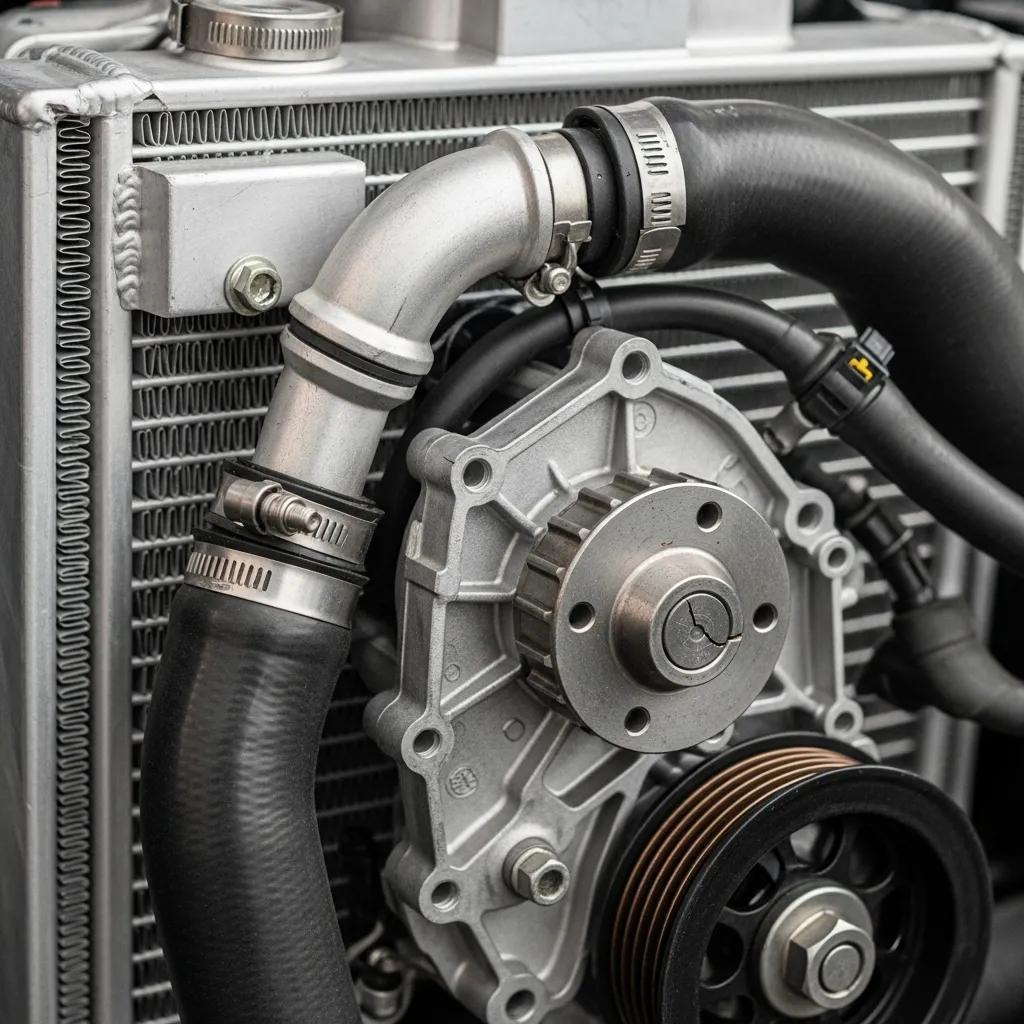
Cooling system failures usually start small and spread quickly: a leaking hose, a failing water pump or a stuck thermostat reduces coolant flow and creates hot spots that can lead to head‑gasket failure or warped heads. Loss of coolant or reduced flow causes temperature spikes and uneven thermal stress, which accelerates metal distortion and oil breakdown and can produce major engine repairs. Catching cooling symptoms early keeps repair bills aligned with the original fault instead of forcing full engine work. In North Andover, seasonal temperature swings and road salt make it especially important to inspect hoses, clamps and the expansion tank.
Common failing components and inspection checklist:
These simple checks catch problems before overheating escalates; the next subsection lists warning signs and when to stop driving.
Water pump and thermostat issues often show early: grinding or whining at the front of the engine can indicate a failing pump bearing, while coolant residue or crusty deposits around the pump or hoses point to seal leaks. Thermostat trouble usually appears as rapid temperature changes, delayed cabin heat, or a temperature gauge that spikes then falls. If you smell sweet antifreeze, see coolant pooling, or notice unusual temperature behavior, pull over when safe and have the cooling system checked to avoid head‑gasket damage or engine seizure. Acting quickly prevents the major cost increases that follow overheating.
List of owner triage actions when noticing cooling symptoms:
How Schneller helps: Prompt coolant‑system diagnostics and replacement of water pumps, thermostats, hoses and expansion tanks stop small leaks from turning into engine failures. Schneller BMW and Mini Specialists provides advanced cooling diagnostics and straightforward repair plans.
Early detection breaks the failure chain: replacing a worn water pump or faulty thermostat before repeated overheating preserves head‑gasket integrity and avoids cylinder‑head machining or full engine replacement. Seasonal inspections and attention to warning lights let technicians measure coolant condition, pressure and flow to predict imminent failures. Preventative hose or pump replacement is almost always far cheaper than the labor and parts required for head repairs. Regular checks also protect parts like thermostat housings and sensors that, if neglected, can cause electrical faults and confusing error codes.
How Schneller helps: Our 54‑point inspection includes cooling‑system checks to identify weak pumps, cracked hoses or failing thermostats early so we can recommend focused repairs before risks escalate.
Small oil leaks typically begin at valve‑cover gaskets, oil‑filter housing gaskets or oil‑pan seals. Left unattended, leaked oil contaminates ignition coils, sensors and rubber components, causing misfires, burning‑oil smells and sensor errors. The problem compounds: oil damages neighboring parts and sludge on electrical components creates intermittent faults that are harder to diagnose. Overlooked leaks increase labor because technicians must clean and trace secondary issues, adding billable hours and parts. Catching gasket leaks early lowers the chance of coil failures, fouled plugs or seized components that greatly raise repair costs.
Signs of gasket/seal leaks include oil spots where you park, a burning oil smell under load, or misfires tied to coil fouling. Early visual checks and targeted gasket replacement stop the cascade of secondary failures that follow oil migration.
Valve‑cover gasket leaks usually show as oil seepage on the engine top, oil pooling near ignition coils, and a persistent burning oil smell once the engine warms. Fouled coils and plugs cause misfires and worse fuel economy, while oil on rubber parts speeds deterioration. You might notice gradual performance loss or an intermittent check‑engine light with misfire codes. Scheduling a gasket inspection when you see these signs prevents ignition‑system damage and keeps the engine reliable.
How Schneller helps: Prompt valve‑cover gasket replacement, plus inspection of ignition coils and related parts, limits secondary repairs. Schneller BMW and Mini Specialists handles gasket and seal work for both routine and complex jobs.
Replacing gaskets early prevents oil from damaging adjacent components, avoiding cascading failures like coil or sensor replacement and even catalytic converter problems from burning oil. A focused gasket job contains labor and avoids broad engine disassembly. In plain terms: pay for a gasket and moderate labor now, rather than multiple parts and extended diagnostics later. Preventative gasket care also keeps diagnostics clear and reduces repeat visits.
How Schneller helps: By repairing leaks early and cleaning affected components, our technicians prevent costly downstream failures. We combine inspection, gasket replacement and honest recommendations to help you prioritize repairs effectively.
The check‑engine light covers many issues from emissions to drivability; ignoring it lets faults grow or hide other emerging problems. BMW‑level diagnostics go beyond a basic OBD‑II scan — factory tools read module data, adaptation values and live VANOS or transmission parameters that reveal root causes. A prompt diagnostic workflow separates urgent faults (oil pressure, coolant temperature, misfires) from lower‑priority codes so repairs follow risk. Ignoring warnings increases the chance a small sensor or actuator fault becomes mechanical damage or a catalytic converter failure.
Treat codes like triage: immediate attention for certain lights, same‑day service for others, and scheduled diagnostics for less urgent issues. The next sections explain why BMW‑specific tools matter and list common warning lights with triage guidance.
BMW‑capable diagnostic tools access module‑specific data — adaptation values, VANOS timing, fuel trim and live sensor outputs — that generic scanners miss. Live data exposes intermittent faults, learned behaviors and module issues that can appear as a single code on a basic scan. For example, VANOS timing anomalies or adaptive fueling issues show in live streams and let technicians pursue targeted mechanical or software fixes. Factory‑level diagnostics reduce guesswork, shorten diagnostic time and lower repair costs because repairs are based on accurate failure modes rather than trial‑and‑error part swaps.
How Schneller helps: Our advanced diagnostic equipment and experienced technicians pinpoint hidden issues quickly. Schneller BMW and Mini Specialists uses BMW‑specific diagnostics to prioritize repairs and avoid unnecessary part changes.
Warning lights that demand attention include the check‑engine light, coolant‑temperature warning, oil‑pressure alert, ABS/traction‑control notices, and airbag/ASC notifications. Each light fits a severity tier: immediate (stop driving and seek service), urgent (schedule same day), and scheduled (monitor and book within a normal interval). For example, oil‑pressure and over‑temperature warnings are immediate‑stop conditions, while a single intermittent ABS light may be urgent but not immediately immobilizing. Note when the light came on and any behavior (loss of power, noises, leaks) to help diagnostics.
List of recommended owner responses by severity:
How Schneller helps: Fast diagnostics with BMW‑capable tools let us prioritize urgency and prevent escalation. Our team provides clear next steps and targeted repairs to resolve faults efficiently.
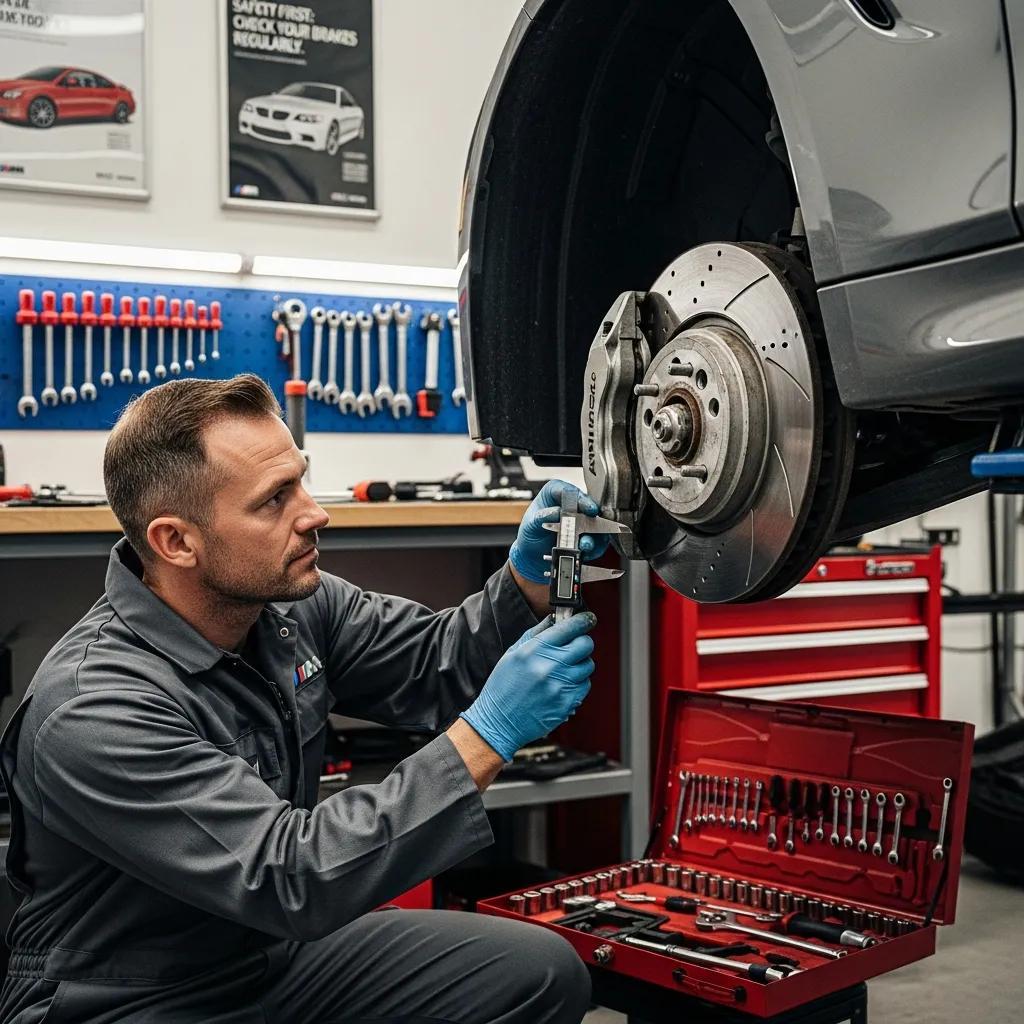
Neglected brakes and suspension reduce stopping performance, raise accident risk and lead to larger repairs like warped rotors, seized calipers or worn control arms — all costlier than routine pad or bushing work. Wear is cumulative: thin pads generate heat and rotor damage; worn bushings and shocks change alignment and speed up tire wear and steering‑component stress. Regular inspections catch measurable wear before it compounds, preserving braking efficiency, ride quality and steering precision. For North Andover drivers facing varied weather and salted roads, seasonal checks are especially important to catch corrosion and related failures.
Seasonal or tire‑change inspections keep components within serviceable limits and prevent expensive downstream replacements; the next subsection lists owner‑visible signs to watch for.
Worn brake pads show as grinding noises, reduced pedal feel or pulsation under braking that indicates rotor wear. Suspension problems present as clunks over bumps, noticeable body lean in corners, poor steering return or uneven tire wear. Visual checks (pad thickness, rotor surface) and simple at‑home tests (road feel, listening for noises) can catch issues early, but professional measurement is required for exact wear limits. Addressing worn pads and shocks early saves rotor and control‑arm costs and keeps the car safe.
How Schneller helps: Professional brake and suspension inspections prevent safety issues and limit repair scope. Schneller provides brake service, suspension repair and straightforward prioritization to keep repair costs under control.
Regular inspections let technicians replace pads before rotors are damaged, identify worn bushings before control arms or tie rods fail, and correct alignment before tires wear unevenly. Proactive maintenance preserves stopping distance, lowers accident risk and maintains resale value by documenting service history and component condition. Replacing pads is a fraction of the cost of rotors or calipers, and timely suspension work can avoid more expensive steering failures. Seasonal inspections timed with brake‑fluid changes and tire swaps are a practical cadence for North Andover owners.
How Schneller helps: Our methodical inspection program — including pad checks, rotor inspection and suspension evaluation — reduces accident risk and repair escalation. We provide repair options based on severity and help you prioritize what matters most.
BMW batteries are managed by a battery management system (BMS) that requires correct replacement and registration to preserve charging strategies and accessory behavior. Improper installation or failing to register a new battery can cause undercharging or overcharging, shorten battery life, and trigger electronic faults in modules and convenience systems. Symptoms include dimming lights, inconsistent starts or multiple electronic errors — issues that can leave you stranded or lead to costly module diagnostics. Proper battery handling keeps the battery and vehicle electronics healthy.
A correct replacement sequence and registration let the BMS learn the new battery’s capacity and chemistry, avoiding charging problems and preserving electrical reliability.
Battery registration tells the vehicle’s BMS about the new battery’s state‑of‑health and capacity so the alternator and charging algorithm charge correctly and extend battery life. Skipping registration can lead to incorrect charging voltages, reduced runtime and early battery or alternator stress. Registration also helps maintain module communication and prevents cascading warnings from unexpected battery behavior. Replacing and registering the battery properly avoids avoidable electrical diagnostics and preserves subsystem performance.
How Schneller helps: We perform battery replacement with proper registration to ensure BMS calibration and charging accuracy, preventing electrical headaches down the road.
Small electrical gremlins — intermittent lights, accessory hiccups or sensor glitches — can grow into major faults when left unattended because poor charging or electrical noise affects sensor inputs and module behavior. Over time that can create misdiagnosed drivability problems, unnecessary module replacements or extensive wiring repairs that are costly and time‑consuming. Addressing electrical symptoms early with targeted diagnostics stops component churn and reduces the risk of immobilizing failures. Proper testing, parts and recalibration restore reliable operation and reduce repeat visits.
How Schneller helps: Accurate electrical diagnostics and module‑level testing prevent small faults from becoming expensive repairs. Our team uses advanced tools and experience to resolve electrical issues promptly.
Uneven tire wear and poor alignment degrade handling, reduce fuel efficiency and transfer abnormal loads into suspension and steering components, increasing repair frequency and part failures. Misalignment changes the contact patch and raises rolling resistance, accelerating bushing and bearing wear. Regular tire rotation and alignment preserve even tread wear, improve safety and prevent premature suspension replacement. In North Andover, seasonal checks after winter and salt exposure help avoid accelerated wear and corrosion‑related problems.
Keeping proper tire pressure, rotating tires at recommended intervals and checking alignment when symptoms appear prevents compounded costs and maintains dynamic performance.
Uneven wear reduces traction, lengthens stopping distances and unsettles handling — especially at higher speeds or during emergency maneuvers. Poor alignment raises rolling resistance, lowers fuel economy and places extra load on wheel bearings, control arms and CV joints, shortening their life. You may notice pulling to one side, steering vibration or uneven tread depth. Fixing alignment and rotation early improves ride quality and reduces the frequency of suspension and steering repairs.
How Schneller helps: Regular tire rotation and alignment checks keep wear even and protect suspension components. Schneller offers rotation, alignment services and inspection recommendations tuned to local driving conditions.
Table: Tire wear symptoms and cost/performance impact for quick reference.
For most BMWs, rotate tires every 7,500 miles or follow your owner’s manual, and check alignment annually or whenever you notice pulling, vibration or uneven wear. Performance tires, aggressive driving or frequent pothole impacts may require more frequent checks. Seasonal alignment checks after winter are a smart step here because salt and road conditions can shift alignment and speed wear. Keeping a rotation and alignment schedule preserves tire life and reduces stress on steering and suspension parts.
How Schneller helps: Following a 7,500‑mile rotation interval and annual alignment checks keeps tires and suspension healthy. Our technicians perform rotations, alignment diagnostics and offer recommendations tailored to your driving style.
Schneller BMW and Mini Specialists is an independent BMW/Mini shop in North Andover serving Newbury, the North Shore and the Merrimack Valley. We bring family‑run values, clear advice and BMW/Mini expertise. Every visit includes a 54‑point inspection and our 3‑year/36K‑mile warranty, combining independent‑shop flexibility with owner protections. From routine oil service and brake work to coolant repairs, valve‑cover gasket jobs, transmission service, suspension repair and battery registration/replacement, we back our work with advanced diagnostics and hands‑on experience — including E30 and Mini knowledge — so local owners get practical, reliable maintenance.
Our 54‑point inspection systematically checks fluids, cooling components, gaskets and seals, brakes, suspension, battery systems (including registration status) and tires/alignment indicators to spot emerging issues before they escalate. Finding small leaks, cooling weaknesses or electrical anomalies early lets us recommend targeted repairs that limit scope and cost. We prioritize corrective actions by risk so owners address the most urgent items first, preserve safety and avoid emergency repairs. The inspection also records vehicle condition for your records and supports warranty claims when applicable.
Our 3‑year/36K‑mile warranty lowers ownership risk by providing post‑service coverage that gives you confidence in repair quality and parts selection. For independent‑shop customers, this warranty demonstrates our commitment to skilled workmanship and helps bridge the trust gap between dealer and independent maintenance. Combined with family values and BMW/Mini specialization, including E30 experience, the warranty makes preventative maintenance an easier investment. For North Andover drivers, our inspection and warranty deliver practical peace of mind and a clear plan to preserve vehicle longevity.
If your BMW’s check‑engine light comes on, address it promptly. Note any symptoms like loss of power, noises or strange smells. If the light is steady, schedule a diagnostic appointment soon; if it’s flashing, stop driving and have the vehicle inspected immediately. Don’t ignore the light — noting when it appeared and what you observed helps your technician diagnose the issue faster.
Signs your brakes need service include squeaking or grinding noises, a pulsating pedal, reduced braking responsiveness or vibrations when stopping. Clunking sounds or a soft pedal are also warning signs. If you notice any of these symptoms, book an inspection with a qualified technician right away — timely brake service is critical for safety and cost control.
Regular rotation and alignment maintain even tire wear, improve handling and help fuel efficiency. Rotating tires evens out wear patterns and extends tire life; proper alignment prevents uneven wear and reduces stress on suspension parts. We recommend rotating every 7,500 miles and checking alignment annually or whenever you feel pulling or vibration.
Keep the battery healthy by having regular inspections, cleaning terminals and checking for corrosion. When replacing the battery, always register the new unit with the car’s BMS so charging is calibrated correctly. Avoid leaving accessories on with the engine off, and have the battery tested if you notice dim lights or slow starts to prevent unexpected failures.
Check for visible leaks at hoses, the water pump and the radiator. Look for corrosion or damage to the expansion tank and confirm coolant level and condition. Listen for unusual water‑pump noises and watch for temperature fluctuations. Regular cooling inspections catch small issues before they become overheating or engine‑damage problems, particularly in areas with harsh winter temperatures.
BMW‑specific fluids are formulated to meet the vehicle’s design and calibration needs. Generic fluids may not protect seals, pumps and transmissions properly, which can cause premature wear or performance issues. Using the correct fluids helps maintain performance, prevent component damage and avoid unexpected electronic or calibration problems. Always check your owner’s manual for the recommended specs.
Prevent costly repairs by following a regular maintenance schedule: timely oil changes, fluid checks, brake inspections and tire rotations. Early detection through routine inspections lets you fix small issues before they grow. Keep up with manufacturer intervals and address warning signs promptly. Working with a trusted specialist like Schneller BMW and Mini Specialists ensures your vehicle receives expert care that reduces the risk of major failures.
Avoiding these common maintenance mistakes helps North Andover BMW owners lower repair costs and keep their cars dependable. Timely inspections and using manufacturer‑recommended fluids are simple, high‑impact habits that protect your investment. If you’d like a professional check, schedule a comprehensive inspection with Schneller BMW and Mini Specialists — we’ll help you prioritize maintenance and keep your BMW or Mini running its best. Book your appointment today.

Monday – Friday: 9:00 AM – 5:00 PM
Saturday & Sunday: Closed