
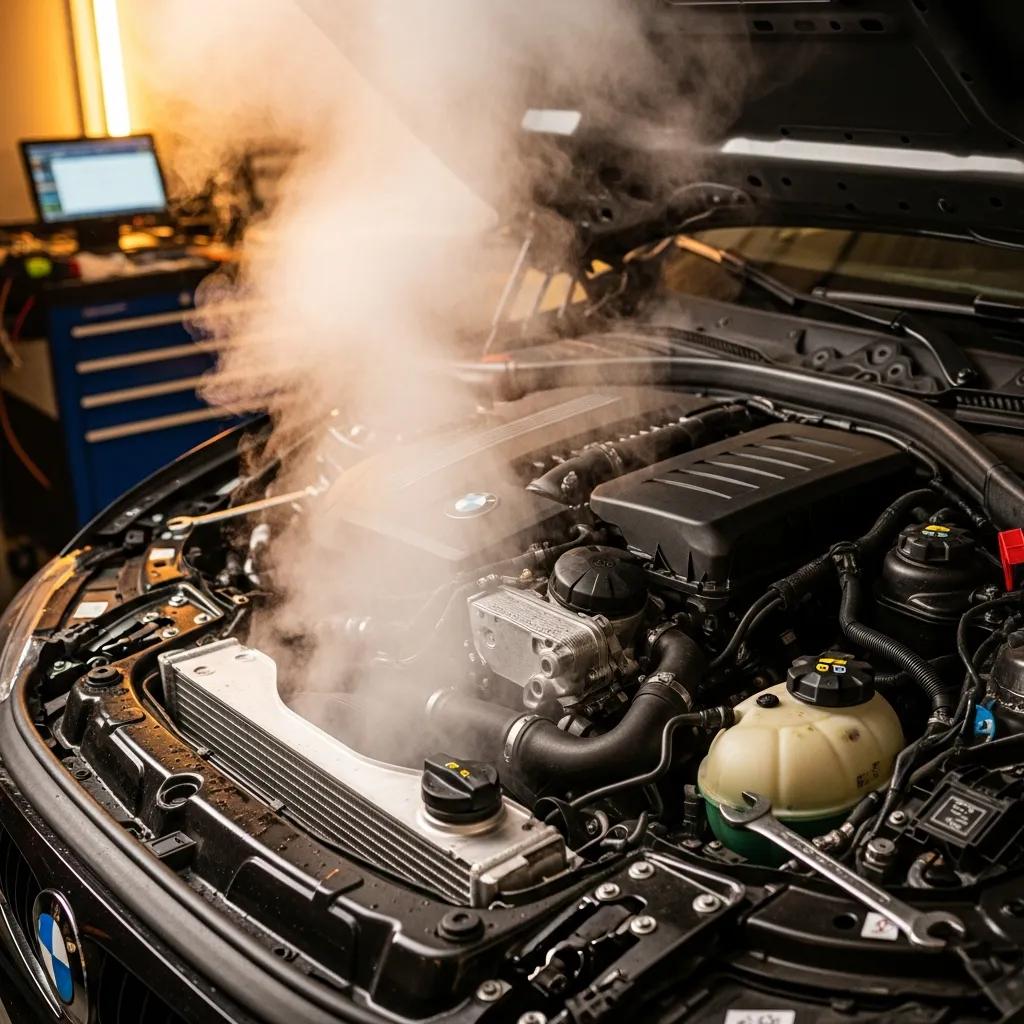
A sweet, hot coolant smell from your BMW isn’t just unpleasant — it’s often the first sign of a leak or an overheating engine. This guide breaks down what that scent usually means, the warning signs to watch for, and the common causes of coolant loss. If you drive in Haverhill, spotting these clues early can save you from costly repairs. Read on to learn how to recognize symptoms, take the right next steps, and when to bring your car to Schneller BMW & Mini Specialists for a professional diagnosis and repair.
That sweet scent most often signals coolant is leaving the cooling system or that the engine is running hotter than normal. Coolant keeps engine temperatures under control — when it leaks or vaporizes, the risk of overheating rises unless you identify and fix the problem.
BMW coolant contains ethylene glycol, which has a naturally sweet odor. That chemical helps protect the engine by lowering freezing points and raising boiling points. When coolant leaks or turns to vapor under heat, the sweet smell becomes noticeable — an early clue that the cooling system isn’t sealing or circulating properly.
The odor typically comes from where coolant can escape: the radiator, hoses, heater core, or water pump. As these parts age, crack, or fail, coolant can leak or spray onto hot components, producing the smell and increasing the chance of overheating. Look for puddles under the car and a temperature gauge that jumps around.

Finding overheating early can prevent major repairs. The main red flags are a rising temperature gauge, steam or smoke from under the hood, and falling coolant levels. Paying attention to these signs gives you the chance to stop damage before it becomes severe.
Your BMW’s temperature gauge should stay in its normal range while driving. If it climbs toward the hot zone or swings wildly, treat that as a warning. Steam or visible vapor from the engine bay usually means coolant is boiling or contacting hot parts — pull over safely and shut off the engine to avoid further damage.
A low reservoir or puddles beneath the car almost always point to a leak. Causes include split hoses, a failing water pump seal, a cracked radiator, or a deteriorating heater core. Regularly checking the coolant level and scanning for wet spots helps catch problems before they lead to overheating.
Several routine failures can let coolant escape or prevent proper circulation. Knowing the usual suspects helps you prioritize inspections and repairs more effectively.
The water pump circulates coolant; if it fails, flow stops and temperatures rise. A stuck thermostat can block coolant from reaching the radiator, causing sudden temperature spikes. Both problems show up as overheating or erratic gauge readings — and both are easier to catch with scheduled maintenance.
The radiator sheds heat, hoses carry coolant, and the heater core sends heat to the cabin. Damage to any of these — corrosion, cracks, ruptures, or loose clamps — leads to leaks. Regular inspections let you spot soft spots, bulges, or dried coolant residue before a small problem becomes a major overheating event.
Delaying attention to a coolant smell or overheating signs risks severe engine damage and higher repair costs. Acting quickly protects your engine and keeps repair bills from escalating.
Ongoing overheating can warp or crack the head gasket, damage pistons and cylinders, and eventually result in total engine failure. A small leak can turn into a costly repair if the engine runs hot repeatedly. Addressing symptoms right away is the best way to limit damage.
Independent assessments show that coolant loss and overheating can cause rapid, serious engine damage — which is why early intervention matters.
Automobile Engine Overheating: Coolant Loss & Damage Assessment
A technical review explaining how coolant loss and overheating affect engine parts, highlighting rapid degradation patterns and common failure modes.
The method of expert assessment of the technical condition of an automobile engine after overheating — O. E. Khrylukiv (2021)
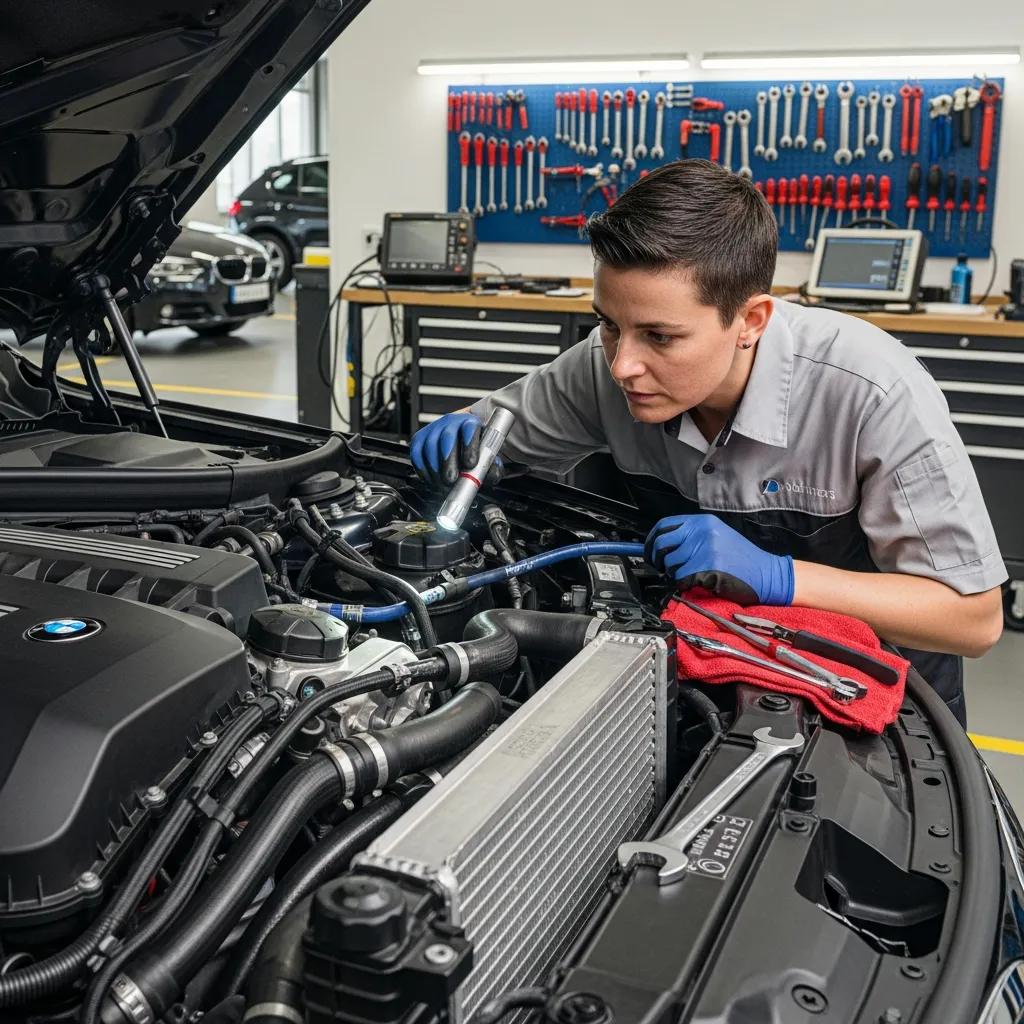
At Schneller BMW & Mini Specialists, our technicians bring more than 30 years of BMW-focused experience to every inspection. We apply OEM knowledge, targeted tests, and careful visual checks to find leaks or failing parts quickly, then perform manufacturer-appropriate repairs so your BMW returns to dependable operation.
Consistent maintenance is the most reliable way to avoid overheating and coolant loss. Routine checks and timely service keep the cooling system working as designed.
Keep these straightforward maintenance steps in mind:
A yearly inspection is a sensible baseline. Replace hoses and belts every 4–5 years or sooner if they show wear. Flush and replace coolant every 2–3 years, or follow the manufacturer’s service schedule to keep performance and protection at their best.
If you smell hot coolant, pull over safely, shut off the engine, and allow it to cool. Never open the radiator cap while the engine is hot. Once cooled, look for visible leaks or steam. If you can’t find the source or the car won’t restart safely, call for professional help — driving on risks major engine damage.
No — use the coolant specified for your BMW. The wrong fluid can cause corrosion, reduced cooling performance, and component failures. Check your owner’s manual or ask Schneller technicians to confirm the correct type.
Watch for fluctuating or unusually low engine temperatures, slow warm-up, or intermittent overheating. A thermostat stuck closed prevents coolant flow and causes overheating; stuck open keeps the engine too cool. If you notice these signs, have the thermostat inspected and replaced if needed.
Ignoring these warnings can lead to warped heads, blown head gaskets, seized bearings, and other costly, often irreversible engine damage. Regular maintenance and prompt repairs protect your BMW’s lifespan and performance.
Check coolant at least once a month and before long trips or extreme weather. Regular checks help you spot leaks early and keep the cooling system functioning properly.
Prevent leaks with scheduled inspections, timely replacement of aged hoses, belts, and clamps, regular coolant flushes, and using the correct BMW-approved fluids. Staying on top of these basics reduces the chance of unexpected cooling-system failures.
A lingering coolant odor can come from residue left by a previous leak, evaporated fluid that didn’t pool on the ground, or small leaks in places like the heater core where fluid vaporizes into the cabin. If the smell persists, have the system pressure-tested and inspected to locate hidden issues.
Begin with a visual inspection of the radiator, hoses, clamps, water pump, and the area under the heater core. Look for wet spots, dried coolant residue, or white/green staining. If the source isn’t obvious, a pressure test or UV dye inspection will pinpoint leaks. Schneller BMW & Mini Specialists offer full diagnostics and repairs to locate leaks and restore proper cooling.
A sweet, hot coolant smell is a useful early warning — don’t wait to investigate. Recognizing the signs and acting promptly can prevent serious engine damage. If you’re in Haverhill or nearby, schedule a cooling-system inspection with Schneller BMW & Mini Specialists so we can diagnose the issue and keep your BMW performing as it should.

Monday – Friday: 9:00 AM – 5:00 PM
Saturday & Sunday: Closed