

A slow crank or a no-start on a winter morning is more than an inconvenience — it’s avoidable. This guide explains why BMW and Mini batteries struggle in cold Boxford temperatures, how to recognize the warning signs, and practical steps to keep you moving. We cover the science behind cold-weather battery performance, common symptoms, preventative care, and why correct battery replacement and registration matter. If you prefer hands-on help, we’ll point you to our comprehensive services right here at Schneller BMW & Mini Specialists.
Cold weather hits several systems at once, and the battery usually shows the first symptoms. Low temperatures reduce a battery’s usable capacity and slow the chemistry that produces starting current. With less available current, the engine has a harder time turning over — especially on chilly mornings.
As temperatures drop, the chemical reactions inside a battery slow and its effective capacity falls. Cold Cranking Amps (CCA) — the rating that indicates how well a battery starts an engine in cold conditions — can decrease noticeably in freezing weather. Research shows a battery may lose roughly half its capacity at 0°F (−18°C) and around 20–30% at 32°F (0°C). Those losses mean slower cranks and, in some cases, no start at all.
Past studies confirm that both cranking and charging are impaired in the cold — the battery can neither deliver nor accept current as efficiently when temperatures fall.
Cold Cranking & Battery Charging in Winter
Because cold cranking draws current, charging effectiveness at a given voltage drops — in low temperatures a battery’s ability to both supply and accept current is reduced. Storage Battery Performance at Low Temperatures, 1943
Yes. Cold oil thickens, increasing internal resistance for the engine and making the starter work harder to spin the motor. That extra load demands more current from the battery — a problem if the battery is already weakened by the cold. Using the manufacturer-recommended winter-grade oil helps the engine turn over more easily on cold starts.
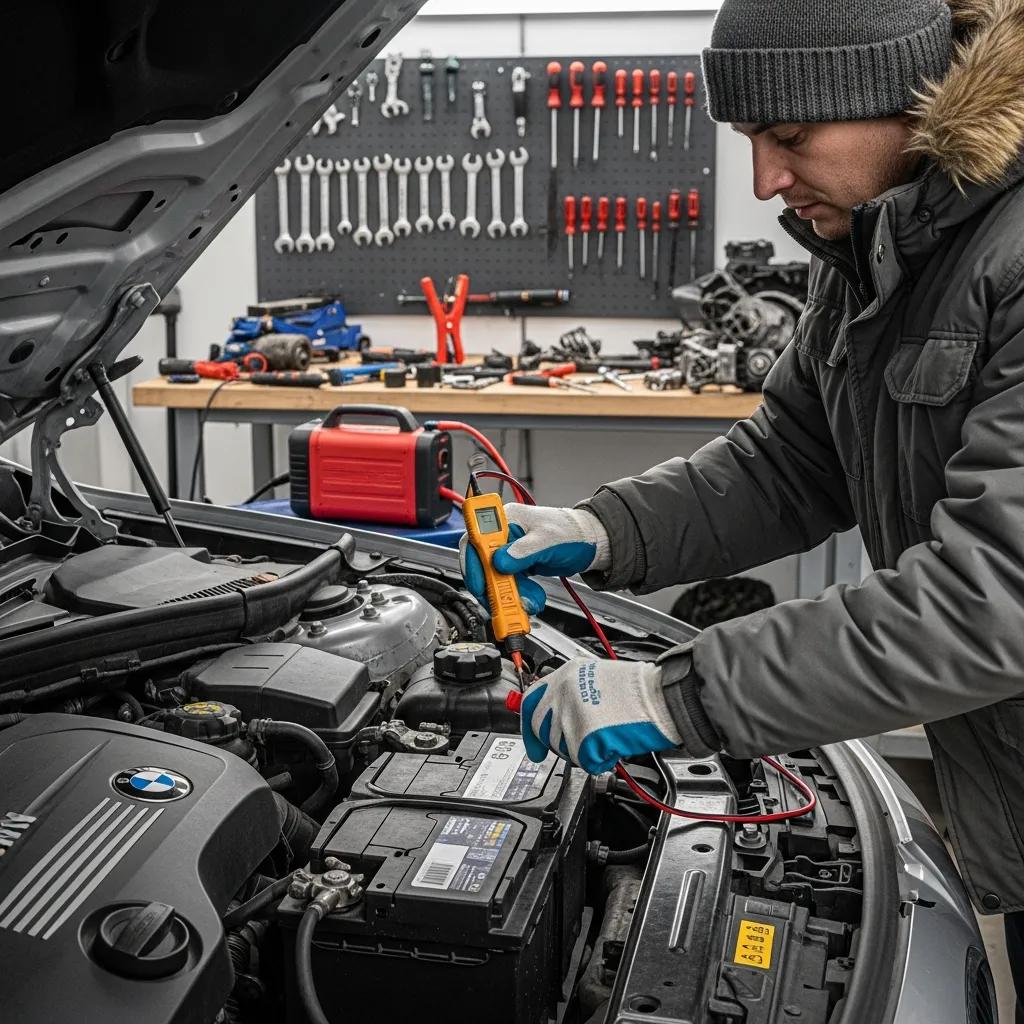
When your car cranks slowly or won’t start, start with a quick battery check: inspect terminals for corrosion and tightness, and measure resting voltage with a multimeter. A fully rested battery reads about 12.6 volts. Significantly lower readings, or a battery that won’t hold voltage after a jump, indicate it needs replacement or further professional testing.
Look for dim headlights, flickering interior lights, dashboard warning indicators, or accessories that behave oddly. Those are early signs the battery is struggling to provide steady power and should trigger immediate testing.
A few routine habits greatly reduce the risk of winter battery trouble. Regular checks and thoughtful storage go a long way toward reliable cold-weather starts.
Maintainers deliver a slow, controlled charge that preserves optimal voltage without overcharging. Paired with sheltered parking, they keep the battery healthier through the season and greatly reduce the chance of a cold-related no-start.
On many BMW models, swapping a battery is only half the job. The vehicle’s control modules need to know a new battery is installed so charging strategy and energy management adjust accordingly. Proper replacement plus registration helps the car charge correctly and extends the life of the new battery.
Battery registration tells the car’s onboard systems about the new battery’s presence and specifications. Without registration, the vehicle may overcharge or undercharge the battery, shortening its life and potentially causing electrical issues.

At Schneller BMW & Mini Specialists we install OEM-grade batteries and perform the required coding or registration so your car’s systems recognize the replacement. Our technicians follow a documented process to ensure your vehicle charges properly and starts reliably all winter.
A weak starter motor may struggle to spin the engine in cold weather, and a failing alternator won’t recharge the battery effectively. Either condition can amplify cold-start problems. If the starter or alternator shows wear, replace or repair them before winter compounds the issue.
Good grounding and clean electrical connections are essential for efficient power flow. Corroded or loose connections add resistance and reduce starter current, making cold starts harder. Regular inspections and proper repairs keep the system operating as designed.
For dependable winter battery care in Boxford, Schneller BMW & Mini Specialists is a local option that focuses on BMW and Mini systems. We diagnose, replace, and register batteries to factory specifications.
With more than 30 years serving BMW and Mini drivers, we combine factory-level knowledge with local, personal service. Our team diagnoses root causes, recommends the right battery and upkeep, and completes required coding so your car runs reliably through cold weather.
Knowing how cold affects your BMW’s battery and electrical system helps you take smart steps before winter arrives. Spot symptoms early, follow simple preventive habits, and rely on trained technicians when you need repairs or a replacement.
First, check for obvious issues like corroded or loose terminals. A jump-start can get you going, but it’s only a temporary fix. If the battery won’t hold a charge after a jump, it likely needs replacement. Bring your car to a specialist — like Schneller BMW & Mini Specialists — for a full diagnosis and safe replacement.
Measure resting voltage with a multimeter — about 12.6 volts is a healthy baseline. Also watch for dim lights, slow cranking, or dashboard alerts. If you notice these signs, have the battery load-tested professionally before temperatures drop.
Choose a battery with a higher Cold Cranking Amps (CCA) rating for stronger starting performance in low temperatures. Pick a model suited to your BMW or Mini and follow manufacturer recommendations — or ask a technician for the best option for your vehicle.
Most batteries last between 3 and 5 years, depending on use and climate. If your battery is in that age range — or shows signs of weakness — replace it before winter to avoid unexpected failures.
Keep terminals clean and tight, avoid repeated short trips, use a battery maintainer during long storage periods, and park in a garage when possible. These steps reduce strain and help preserve battery life through cold months.
Yes. Cold thickens engine oil, making the engine harder to turn. The starter motor and alternator can also underperform in low temperatures. Regular inspections of these components, along with the battery, help prevent winter starting issues.
Cold weather exposes weaknesses in the battery and electrical system, but a little preparation prevents most problems. Recognize the symptoms, keep up with basic winter care, and trust certified technicians for battery replacement and registration. If you’re in Boxford, Schneller BMW & Mini Specialists can help keep your car reliable all winter long.

Monday – Friday: 9:00 AM – 5:00 PM
Saturday & Sunday: Closed