

If you’re hearing clunks, feeling vibrations at speed, or the steering seems vague, your BMW’s suspension is telling you it needs attention. This guide explains the common symptoms, how the suspension works, likely causes, and what to expect from a professional inspection. We’ll also describe how Schneller BMW & Mini Specialists approach repairs so your car handles precisely and rides comfortably again.
BMW owners often see the same set of warning signs as suspension parts age or fail.
Spotting these symptoms early limits further damage and helps keep you safe on the road.
The issues we hear about most are audible clunks, vibrations at highway speeds, and steering that feels loose or imprecise.
Because each symptom can come from multiple sources, a careful inspection is the best way to find the root cause.
Clunks usually mean a part that should be absorbing or controlling movement has worn or shifted out of tolerance. Common sources include control arms, bushings, and struts that no longer isolate impacts. When these components degrade, metal-on-metal contact or excessive play can produce that unmistakable clunk. Left alone, the problem often gets worse and can affect handling and safety.
Research shows that wear in control-arm joints and deteriorated bushings are frequent causes of these clunking sounds.
Control Arm Ball Joint Wear & Clunk Diagnosis
The study explains that water-driven corrosion on ball-joint mandrels and severe bushing breakdown make it hard to pinpoint the sound. Changes in friction and joint clearance raise the chance of audible clunks, so a detailed inspection is usually required to diagnose the issue accurately.
A study on wear and friction of passenger vehicles control arm ball joints, M Wozniak, 2021

Vibrations at higher speeds most often trace back to the wheels, tires, or alignment. Unbalanced wheels, misaligned suspension geometry, or worn tires are the usual suspects. These vibrations reduce ride comfort and can speed up wear on other components, so prompt balancing, alignment checks, and tire inspections matter.
The suspension’s job is to keep the tires planted while smoothing out road irregularities. Key components — springs, shock absorbers, control arms, and bushings — each play a specific role: springs carry the load, shocks control motion, control arms position the wheel, and bushings cushion and reduce noise. Together they preserve stability, steering accuracy, and ride quality.
Technical reviews of BMW suspension and steering underline how component design and regular maintenance impact vibration control and overall safety.
BMW 520 Suspension & Steering: Fundamentals, Maintenance & Vibration Control
This paper summarizes the BMW 520’s suspension and steering layout, covering front- and rear-axle systems, how suspension adapts to different tire constructions, and straightforward front-assembly maintenance. It also details steering features and vibration-control strategies that support reliability, easier servicing, and safer handling.
Suspension and Steering Fundamentals of the BMW 520, 1974
Main suspension parts to know:
Understanding these parts helps you recognize where a problem might be coming from when symptoms appear.
Control arms set the wheel’s travel path; ball joints let the suspension and steering pivot; bushings absorb motion and prevent metal-to-metal contact. Worn control arms or ball joints introduce play and alignment drift. Failing bushings allow excess movement, which creates noise and instability. Regular inspections catch wear before handling is compromised.
Because clunks can originate from several areas, a methodical inspection is the only reliable way to find the source. Technicians check for excessive play, torn or hardened rubber parts, fluid leaks, and worn struts or mounts.
Frequent causes of clunking include:
Finding the exact failing part lets us recommend the targeted repair rather than guessing.
At Schneller BMW & Mini Specialists we pair hands-on inspections with diagnostic tools. We test suspension articulation, verify torque specs, examine mount condition, and measure component wear. After isolating the source, we present repair options and expected outcomes so you can choose with confidence.
Modern diagnostic techniques — including sensor and data checks — help us isolate complex suspension faults on newer BMWs.
Vehicle Suspension Sensor Fault Diagnosis Algorithms
This paper stresses that suspension fault-diagnosis systems must include routines to detect and isolate sensor errors. Accurate diagnosis depends on separating true mechanical problems from faulty sensor data, particularly in modern, sensor-rich suspension systems.
Sensor fault detection and isolation using a support vector machine for vehicle suspension systems, K Jeong, 2020
High-speed vibration is often straightforward to correct once we identify the source. Balancing, alignment, and tire condition are the first checks. Sometimes wheel damage or worn suspension parts require repair or replacement.
Common vibration sources include:
Addressing the root cause restores smoothness and helps components last longer.
We use calibrated balancing machines, alignment racks, and a structured visual inspection to find the source. When needed, we road-test the car and re-check components under load to confirm the fix — whether that’s balancing, alignment, tire replacement, or suspension repair.
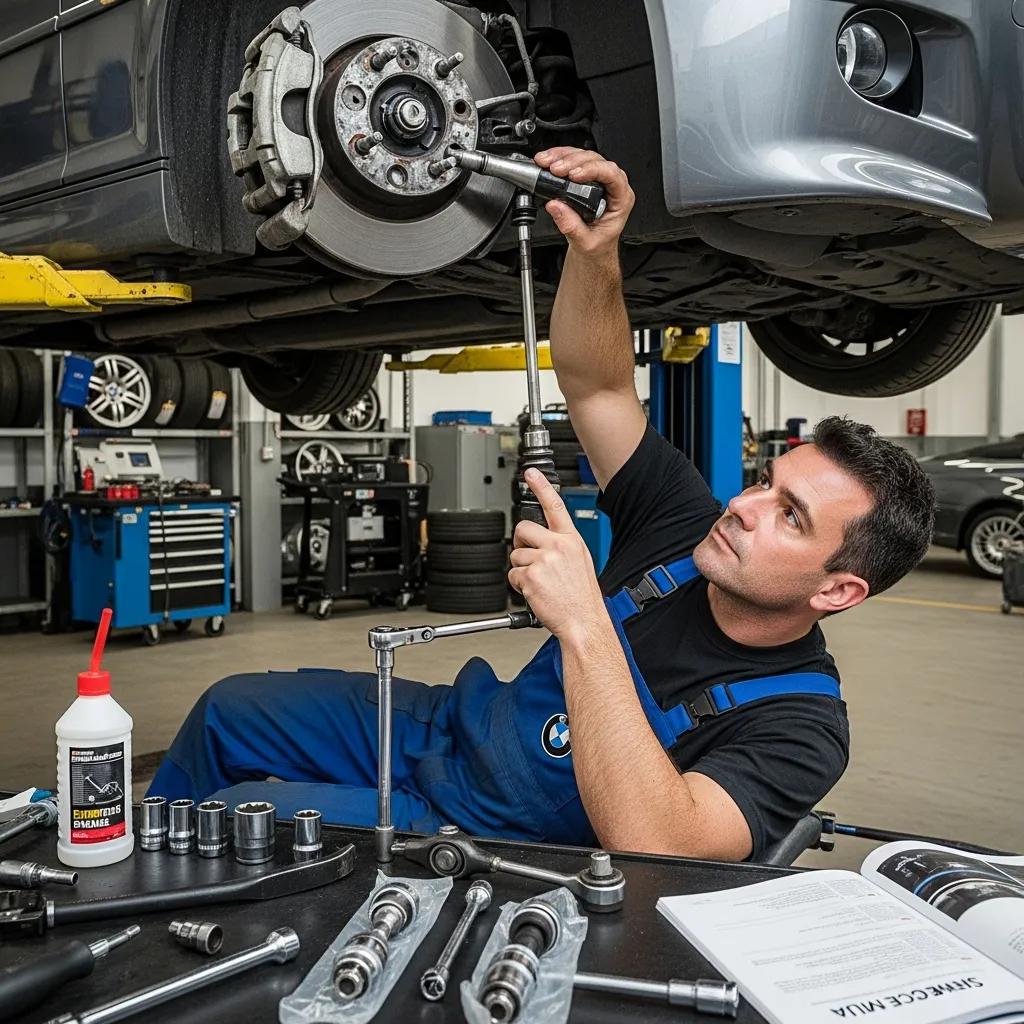
Loose or vague steering reduces confidence and can hide other suspension problems. A focused inspection of steering linkages, the steering rack, and related parts reveals whether the issue is mechanical, alignment-related, or fluid-based.
Loose or vague steering can come from several sources, including:
Pinpointing the cause lets us recommend the right repair without guesswork.
To return crisp steering, we commonly use:
These steps typically bring steering back to a predictable, confident feel.
Specializing in BMWs and Minis matters. Our focus means technicians who know the platforms, tolerances, and service sequences that preserve performance and safety.
With more than 30 years of BMW and Mini-focused service experience, Schneller BMW & Mini Specialists deliver precise diagnostics and targeted repairs. We stand behind our work with a parts-and-labor warranty — ask for the specific coverage that applies to your repair.
Local service gives you fast access, advice tuned to area driving conditions, and a personal touch you don’t get at national chains. We know the roads here, the common wear patterns they create, and we treat every car like one of our own.
Watch for excessive bouncing after bumps, loud clunks, steering that wanders or feels loose, and uneven tire wear. Any of these call for a prompt inspection — waiting can speed up wear and compromise safety.
We recommend a suspension check at least once a year or every 12,000 miles, whichever comes first. If you hit potholes, curbs, or notice symptoms earlier, bring the car in sooner.
You can keep an eye on tire pressure, visually check for obvious damage, and listen for new noises, but most suspension work requires specialty tools and experience. For accurate diagnosis and safe repairs, a trained technician is the best option.
Expect a structured inspection: visual checks, component play tests, alignment readings, and road testing when needed. We’ll give you a clear report with recommended repairs and cost options before any work begins.
Prevent problems with regular inspections, timely tire rotations and balancing, cautious driving over rough roads, and avoiding overload. Address impacts like potholes right away — early attention saves money and improves safety.
We offer a parts-and-labor warranty on qualifying suspension repairs. Coverage varies by repair type, so we’ll outline the exact terms when we present your estimate.
Clunks, vibrations, and loose steering are clear signals your BMW’s suspension needs service. Catching these signs early and choosing a specialist keeps repairs focused and cost-effective. Schneller BMW & Mini Specialists bring experience, precise diagnostics, and warranty-backed repairs — schedule an inspection and we’ll get your BMW handling the way it should.

Monday – Friday: 9:00 AM – 5:00 PM
Saturday & Sunday: Closed